How Sperm Whales Dive Thousands of Metres Into the Dark
Sperm whales hunt squid in total darkness more than a kilometre below the surface. Their bodies are built for pressure most animals could never survive.
In this article
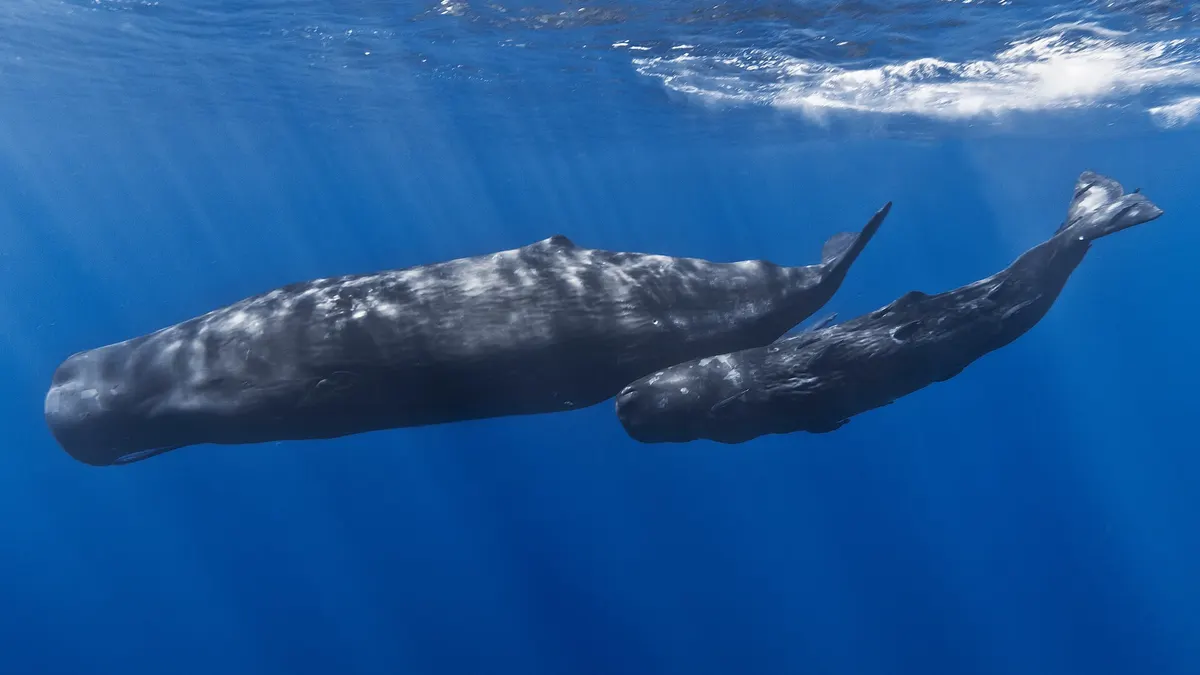
The sperm whale (Physeter macrocephalus) is the largest toothed predator on Earth and one of the deepest-diving mammals. With its huge block-shaped head, wrinkled skin and narrow lower jaw, it looks unlike any other whale, and it lives a life that is largely hidden from us in the deep sea.
Record-breaking dives
Sperm whales routinely dive to depths of 400 to 1,200 metres, and some dives are thought to exceed 2,000 metres. A typical feeding dive lasts 30 to 60 minutes, though longer dives have been recorded. Between dives, the whale rests at the surface for several minutes, breathing and restoring its oxygen supply.
How their bodies cope
At great depths, the pressure is more than 100 times what we experience at sea level. Sperm whales have several adaptations that make deep diving possible:
- Oxygen stored in muscles and blood. Their muscles contain very high levels of myoglobin, a protein that holds oxygen, giving the muscle a very dark colour.
- Collapsible lungs. Instead of resisting pressure, the lungs collapse during a dive, which reduces the risk of nitrogen absorbing into the blood.
- Slowed heart rate. Like other diving mammals, they can slow the heart and redirect blood to the brain and vital organs.
Hunting with sound
There is no sunlight in the deep ocean, so sperm whales hunt using echolocation. They produce powerful clicks, among the loudest biological sounds known, and listen for echoes bouncing off prey. The massive head contains the spermaceti organ, filled with a waxy oil, which is thought to help focus and direct these clicks.
Their main prey is squid, including medium-sized species and, occasionally, giant squid. Circular scars from squid suckers are sometimes seen on sperm whale skin, evidence of struggles in the deep.
A sperm whale click can be heard by underwater microphones many kilometres away.
Social life at the surface
Female sperm whales and their young live in stable social units, usually in warmer waters. They babysit each other's calves while mothers dive. Adult males tend to leave these groups and travel to colder, high-latitude waters, returning to the tropics to breed. Like orcas, sperm whale groups have distinctive click patterns called codas, and different clans use different coda repertoires.
Conservation status
Sperm whales were a major target of historical whaling, hunted for their oil. Today they are listed as Vulnerable by the IUCN. Threats include entanglement in fishing gear, ship strikes, ingestion of plastic debris and underwater noise.
Quick facts
- Length: males up to about 16–18 m; females around 11 m
- Brain: the largest brain of any known animal
- Diet: mainly squid, also fish
- Status: Vulnerable (IUCN)
Keep reading
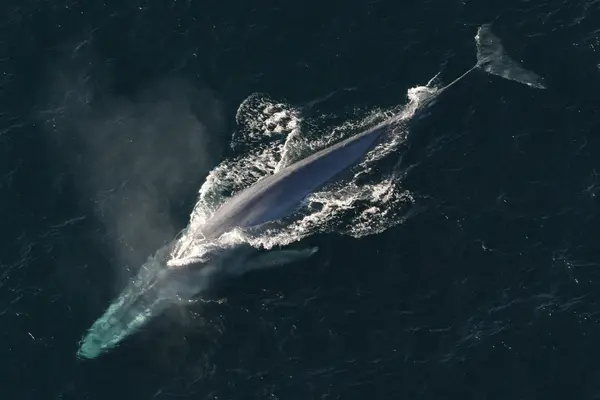
The Blue Whale: Inside the Largest Animal That Has Ever Lived
Longer than a basketball court and heavier than any dinosaur, the blue whale survives on some of the smallest animals in the sea. Here is how it works.
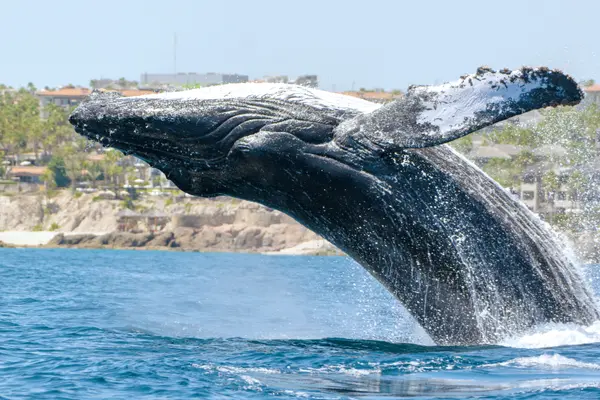
Why Do Humpback Whales Sing? The Science Behind the Ocean's Greatest Songs
Male humpbacks perform long, complex songs that change every year and spread across entire ocean basins. Researchers are still decoding why.
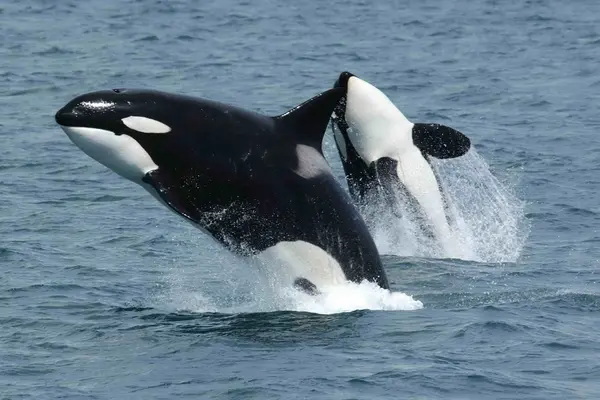
Orcas: Family, Culture and Hunting Strategies of the Killer Whale
Orcas live in tight family groups led by older females, with their own dialects and hunting traditions passed down through generations.