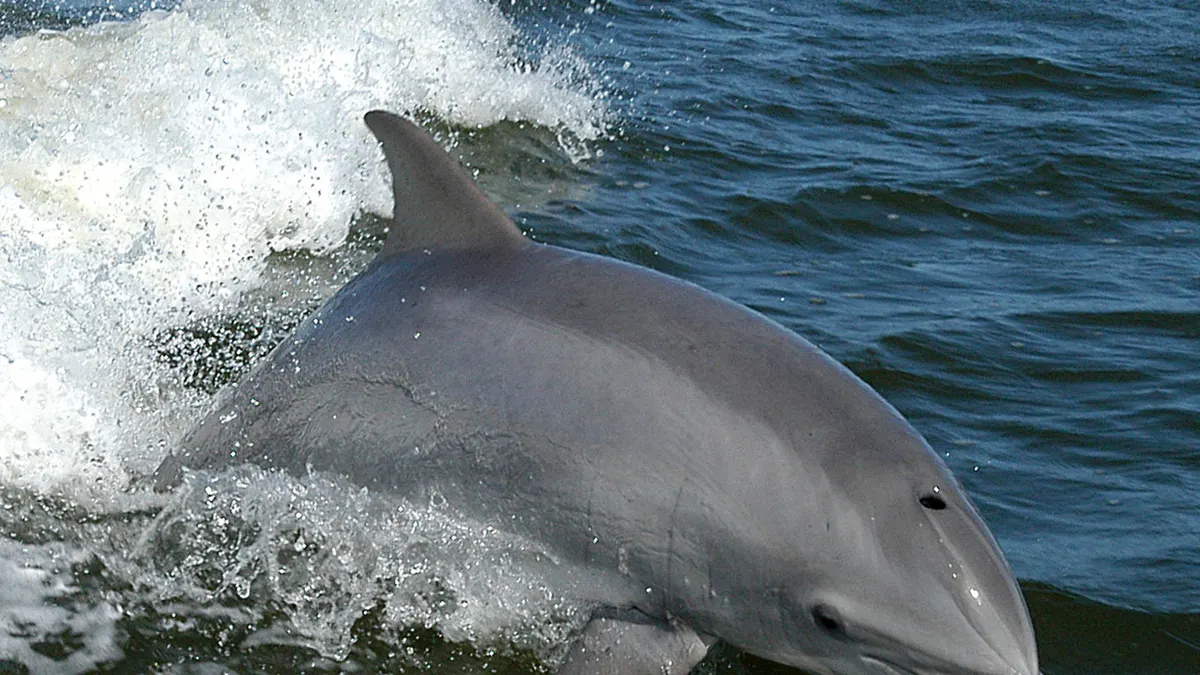
Signature Whistles: How Bottlenose Dolphins Call Each Other by Name
Each bottlenose dolphin develops a unique whistle that works a lot like a name, and other dolphins can copy it to get its attention.
In this article
Bottlenose dolphins (Tursiops truncatus) are among the most familiar marine mammals, living in coastal and offshore waters in temperate and tropical seas worldwide. Beyond their playful reputation, they are the subject of some of the most exciting research into animal communication.
A whistle that works like a name
Within the first months of life, each bottlenose dolphin develops its own distinctive whistle, known as a signature whistle. The dolphin uses this whistle to broadcast its identity, especially when separated from its group. Studies have shown that dolphins can copy the signature whistle of another dolphin, and that dolphins respond more strongly when they hear their own whistle played back to them. This is one of the closest parallels to human names found in the animal kingdom.
Dolphins also appear to remember the signature whistles of former companions for many years. One study found that dolphins recognised the whistles of animals they had not been with for over 20 years.
Echolocation
Like many toothed whales, dolphins use rapid clicks to echolocate. By interpreting the returning echoes, they can detect fish buried in sand, judge the size and shape of objects and navigate in murky water.
Clever foraging
Different dolphin communities have developed their own foraging traditions:
- In Shark Bay, Australia, some dolphins carry marine sponges on their beaks to protect them while searching the sea floor, a behaviour passed mostly from mothers to daughters.
- In parts of South Carolina and Georgia in the United States, dolphins herd fish onto muddy banks and briefly slide out of the water to catch them, known as strand feeding.
- In Laguna, Brazil, dolphins have cooperated with local fishers for generations, driving fish toward nets and signalling when to cast.
Social networks
Bottlenose dolphins live in what scientists call a fission-fusion society: group membership changes often, but individuals keep long-term relationships. Males in some populations form tight alliances with one or two partners that can last for decades.
Quick facts
- Length: about 2–4 m
- Lifespan: often 40–50 years for females
- Status: Least Concern (IUCN)
- Threats: bycatch, pollution, habitat disturbance
Keep reading
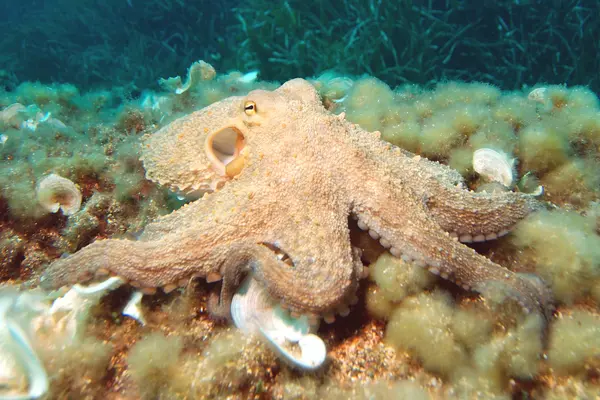
Octopus Intelligence: Nine Brains, Three Hearts and a Lot of Curiosity
Octopuses solve puzzles, escape tanks and change colour in a blink. Their intelligence evolved completely separately from ours.
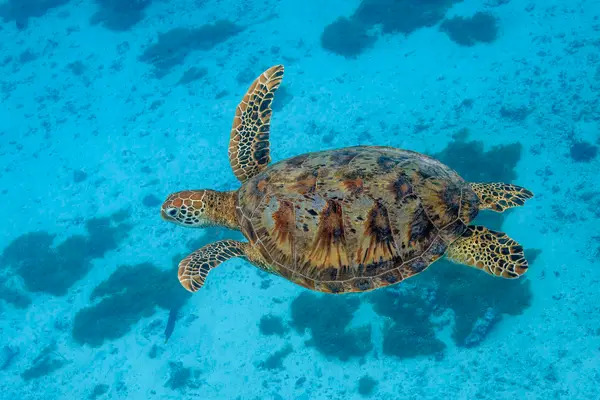
Green Sea Turtles: Navigators That Return to the Beach Where They Were Born
Green turtles cross entire oceans and then find their way back to their birth beach decades later. Earth's magnetic field may be their map.
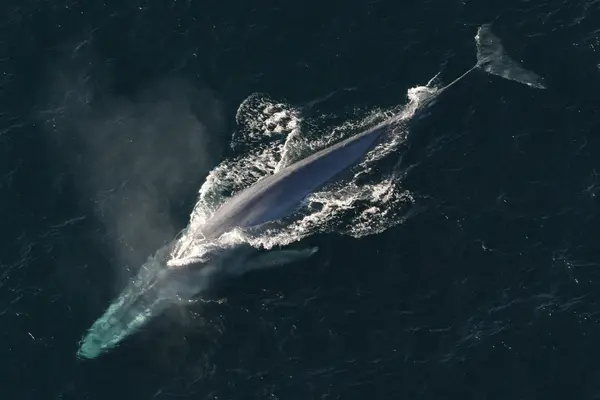
The Blue Whale: Inside the Largest Animal That Has Ever Lived
Longer than a basketball court and heavier than any dinosaur, the blue whale survives on some of the smallest animals in the sea. Here is how it works.